We analyzed more than 12,000 service requests submitted through RV Help over the past year to find out which issues are the most common.
What we found wasn't surprising to the technicians on our platform, but it might surprise you: the vast majority of the most common and costly RV repairs are the result of maintenance that didn't happen — often because nobody ever told the owner it needed to.
The person who sold you your RV probably didn't walk you through everything you're supposed to be doing regularly. Few owners have read their manual cover to cover. So when the slide-out sticks at a campsite, the generator won't start at the worst possible moment, or a water leak quietly turns into thousands of dollars of rot and mold damage, it feels like bad luck. Most of the time, it isn't.
Read on to learn about seven of the most common RV issues that are preventable with routine maintenance, and what you can do to make sure they don't happen to you.
1. Roof and exterior leaks from deteriorating sealant
3.8% of service requests
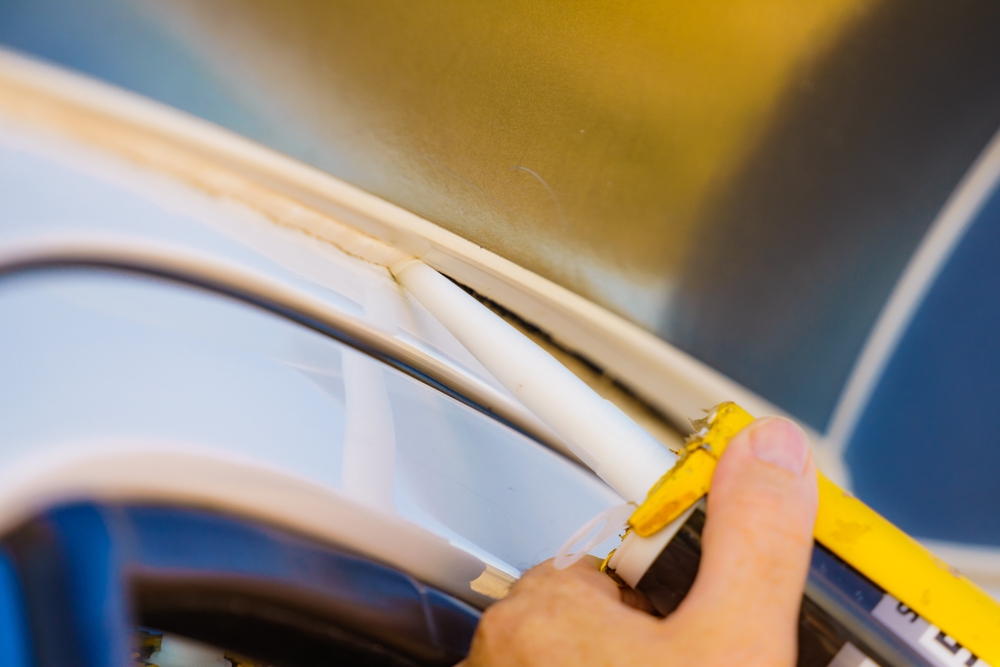
Water damage is one of the most expensive and value-destroying problems an RV can have, and most of it is preventable. RV sealant around roof seams, vents, skylights, and slide-outs degrades over time and needs to be inspected and resealed every 6 months at a minimum.
A small gap that would cost almost nothing to address with a tube of sealant can allow water to work its way in for months or years before it's noticed. By then, you're looking at rot, mold, and structural damage that can cost thousands to repair and significantly hurt your resale value.
Read our guide on RV roof maintenance to learn more about the routine maintenance your roof needs. After you complete the recommended tasks, mark them as done in the RV Help app so you'll get a reminder the next time they're due!
2. Air conditioner failure
17.4% of service requests
Your RV's AC works incredibly hard — especially in summer heat — and it needs regular attention to keep running efficiently.
Most RV owners know they should be replacing the air return filter (even if they aren’t doing it as often as they should), but may not realize they also need to be getting up on the roof, removing the shroud, and cleaning the coils.
When the shroud isn't removed and the coils aren't cleaned annually, the unit has to work harder and harder until it eventually gives out. A new rooftop AC unit can run $800–$1,500 or more, plus labor. Annual cleaning costs a fraction of that. Learn more about this essential maintenance task in our Air Conditioner Maintenance Guide.
3. Stuck slide-outs
13% of service requests
Slide-out mechanisms need to be cleaned and lubricated regularly. When that doesn't happen, the components wear down, and what started as a minor stiffness can become a slide that won't go in or out at all. This is the kind of problem that can strand you at a campsite when you were hoping to be hitting the road.
Keeping your slide mechanisms clean and regularly applying the right lubricant to the right components on a consistent schedule goes a long way toward keeping your slides operating the way they're supposed to. Be sure to consult the manual for your slideout (or contact the manufacturer) to determine the correct type of lubricant, as using the wrong lubricant can potentially damage the slideout mechanism.
4. Water heater failure
9% of service requests
Many RV owners don't think about their water heater until it stops working. By then, it's usually too late to avoid an expensive fix.
If you have a Suburban brand tank-style water heater, there's a component inside called an anode rod — a metal rod designed to corrode so your tank doesn't have to. When it's fully depleted and hasn't been replaced, the tank itself starts corroding from the inside out. A replacement RV water heater can run $300–$700 or more, plus labor. The anode rod itself costs less than $20 and should be inspected and replaced annually.
Not all RV water heaters have an anode rod, but that doesn't mean they don't need regular attention. Tankless and anode-free models have their own maintenance requirements that, when skipped, lead to the same result: a water heater that fails before its time.
Read our guide on RV water heater maintenance to learn what your specific water heater needs and how often. Then log the tasks in the RV Help app so you'll get a reminder when they're due.
5. Generator Failure
4.9% of service requests
Your RV's generator is one of those things that can sit unused for months at a time — and that's exactly the problem. Generators need to be run regularly to stay in good working order. When they sit too long without use, fuel degrades in the carburetor, seals dry out, and components that need lubrication don't get it. The result is a generator that won't start when you actually need it.
The fix is simple: run your generator under load for at least two hours every month. That means running it with something drawing power like your AC, microwave, or other appliances. This keeps the fuel system from gumming up, the seals from drying out, and everything lubricated and functioning the way it should.
Beyond monthly exercise, generators also need regular oil changes and air filter cleaning or replacement — similar to a car engine. Intervals vary by model, so check your manual. Skipping these is the kind of thing that shortens a generator's life significantly. A new RV generator can run anywhere from $500 to several thousand dollars depending on your setup. Keeping up with a simple maintenance routine costs a fraction of that.
6. Premature battery failure
4.8% of service requests
RV batteries often die prematurely because of how they were treated...or neglected. The most common culprits are leaving batteries in a deeply discharged state for extended periods (which permanently reduces capacity), allowing corrosion to build up on the battery terminals, and, for flooded lead-acid batteries, failing to top off the cells with distilled water as electrolyte levels drop.
Replacing an RV house battery bank can run anywhere from a few hundred to well over $1,000 depending on the size of your system and battery type. With basic maintenance — keeping batteries charged, checking electrolyte levels, doing an annual load test, and regularly cleaning battery terminals to keep them free of corrosion — most battery banks will last significantly longer.
7. Tire blowouts
0.7% of service requests
The four most common reasons for RV tires to fail are fortunately all preventable.
Underinflation is one of the easiest to address; just check your tire pressure before every trip using a tire gauge or pressure monitoring system. Underinflated tires generate excess heat and stress that can lead to a blowout at highway speed.
Dry rot happens when tires sit for extended periods without use, or when they're exposed to UV rays and ozone over time. The rubber degrades, cracks, and loses its structural integrity. If you're storing your RV for long stretches, keeping tires covered and off the ground can help slow the process.
Exceeding the tire's speed rating is something many RV owners don't even know is a factor. Every tire has a maximum speed rating stamped on the sidewall. Towing consistently at or above that limit generates heat and stress the tire isn't designed to handle, so it’s important not to exceed that speed rating when towing, even if the highway’s speed limit would allow you to drive faster, because.
Age is the sneakiest cause of tire failure: a tire can look perfectly fine and still be a serious blowout risk. RV tires are generally recommended for replacement every 5–7 years regardless of tread depth or appearance. To determine the age of your tires, look for a four-digit code stamped on the sidewall of the tire. The first two numbers indicate the week of the year they were made (for example: 04 = fourth week of the year) and the last two numbers tell you the year they were made. Tip: If you don’t see a number on your tire, check the other side.
What other routine maintenance does your RV need?
These seven issues represent some of the most common service requests we see — but they're far from the only maintenance your RV needs. There are dozens of tasks specific to your RV's year, make, and model that could be just as costly to ignore, and most owners have no idea they exist.
That's exactly the problem the free RV Help app is built to solve. When you enter your RV's year, make, and model, the app automatically builds a customized maintenance schedule based on manufacturer recommendations. It tells you what's due, when it's due, and how to do it — with step-by-step instructions for each task and video guides for RV Help Pro users.
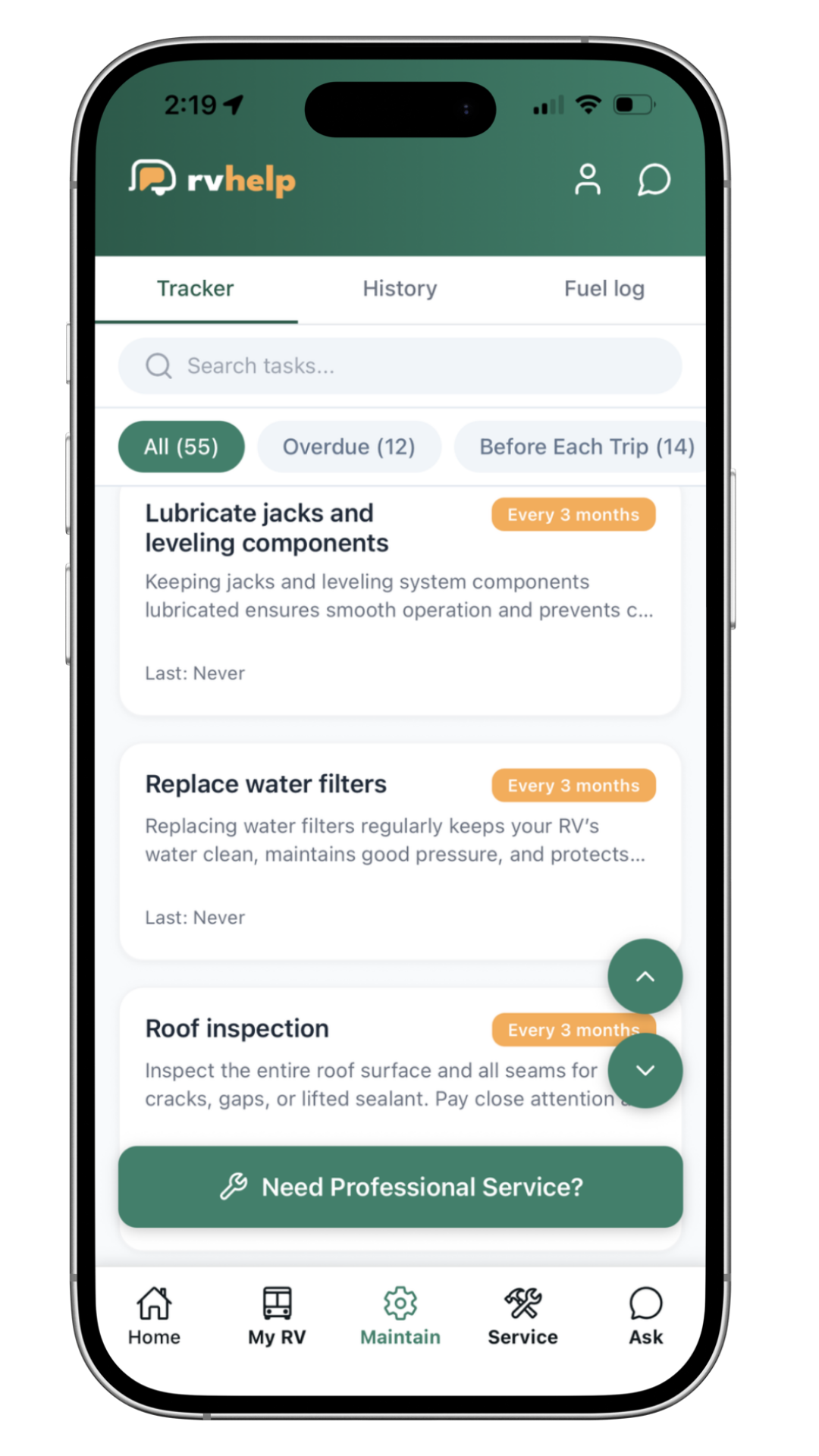
After you complete a task, mark it as done, upload any photos or receipts, and the app logs it automatically. No more guessing. No more forgetting. No more finding out about skipped maintenance the expensive way.
And if any of these tasks feel over your head or like something you'd rather just not deal with, you can book a certified mobile RV tech right from the app to come to your campsite, driveway, or storage lot and handle it for you.
Like this article? Add RV Help as a preferred source on Google to see more of our guides in your search results.
FREE RV Maintenance Checklist Spreadsheet
A printable and editable spreadsheet to help you stay on top of RV maintenance tasks. Organized by frequency, with space to add notes and track completion dates, so you can keep your RV in top condition year-round.
By submitting this form, you'll receive our newsletter and the free download. You can unsubscribe at any time.
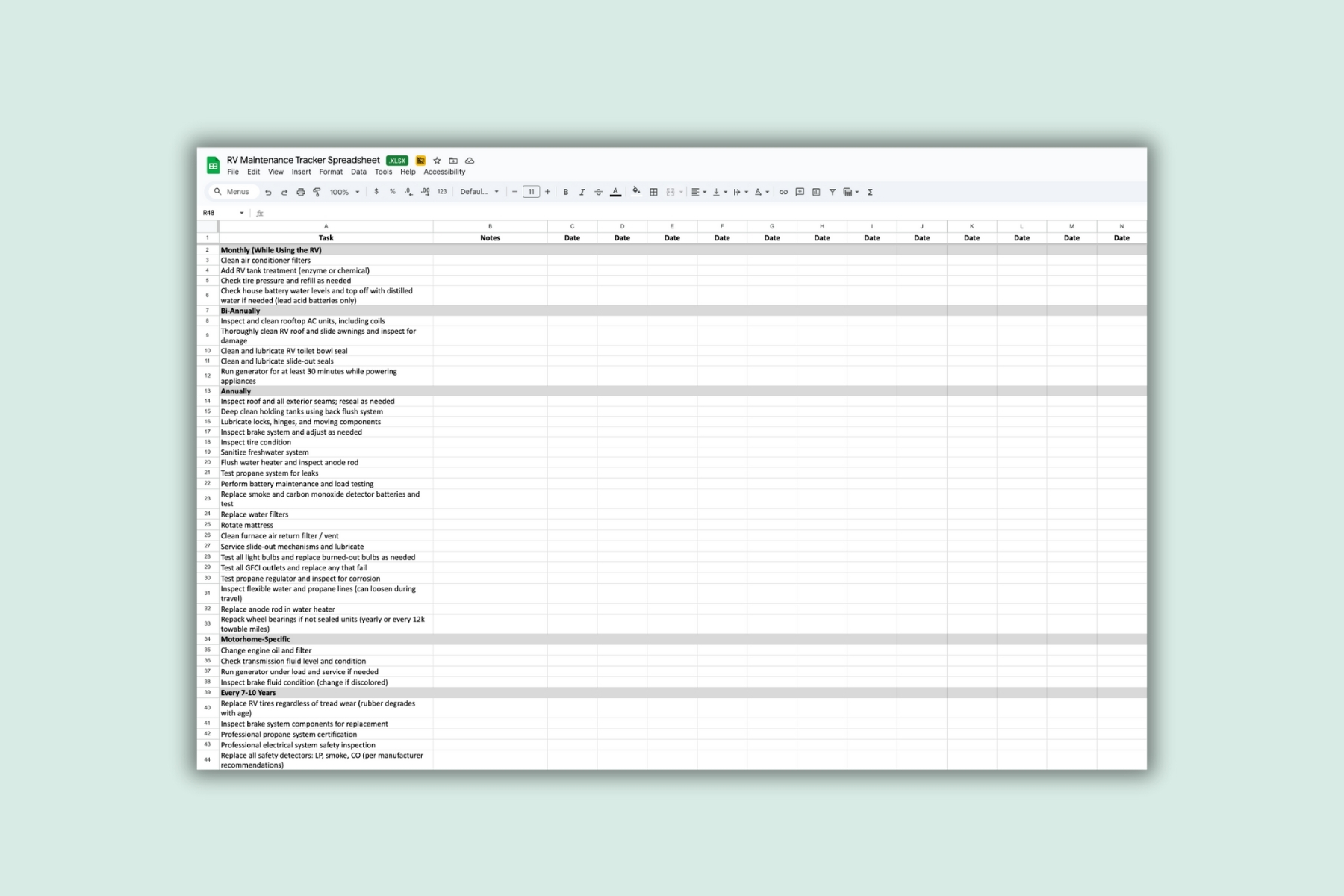
FREE RV Maintenance Checklist Spreadsheet
A printable and editable spreadsheet to help you stay on top of RV maintenance tasks. Organized by frequency, with space to add notes and track completion dates, so you can keep your RV in top condition year-round.
By submitting this form, you'll receive our newsletter and the free download. You can unsubscribe at any time.