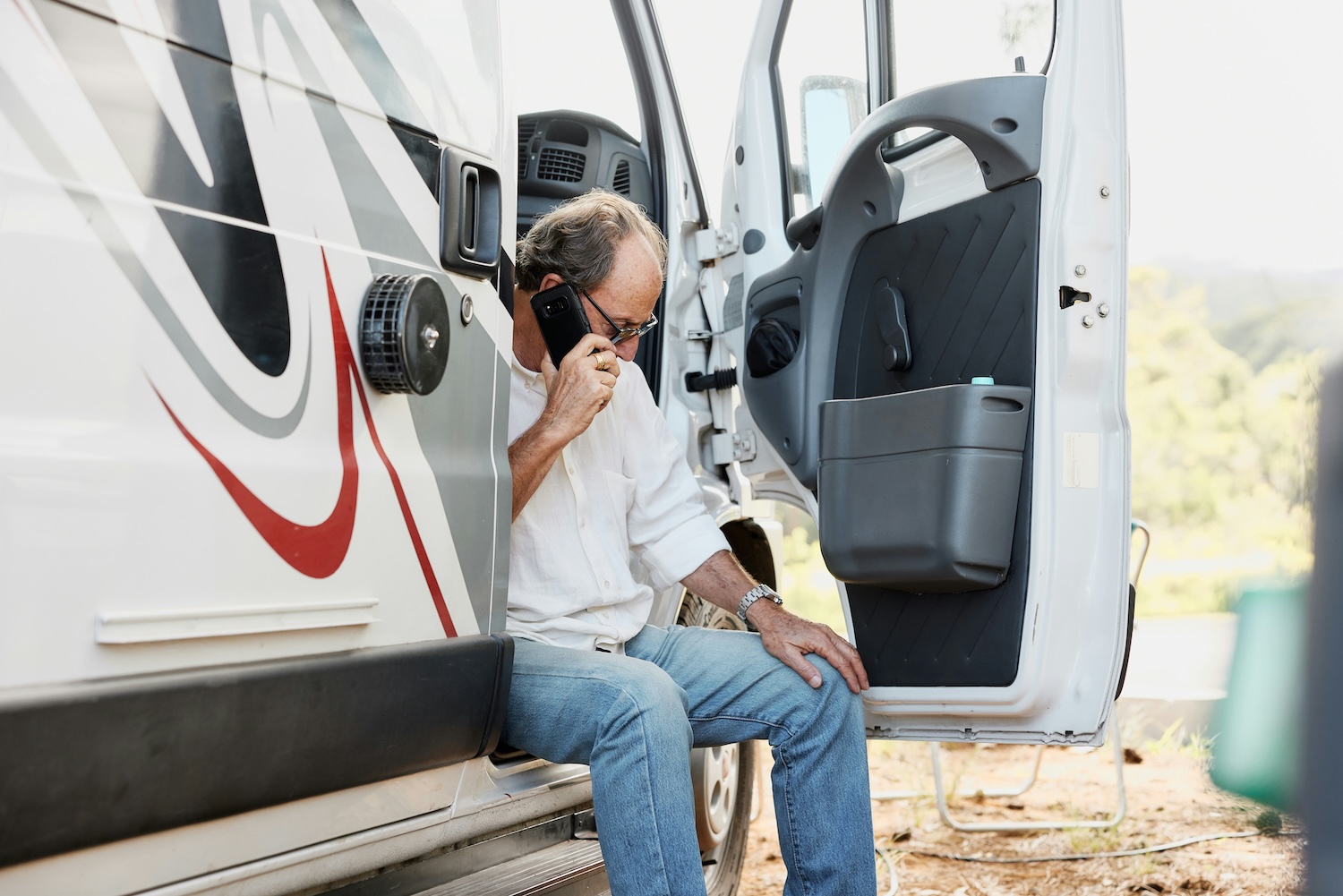
No matter how well you maintain your RV, things go wrong. A branch scrapes the roof at the perfect angle. A water line gives out at a campground with too-high pressure. A slide-out decides not to budge when you're trying to leave. These aren't signs of a bad rig or a careless owner. They're just part of RV life.
The difference between a minor inconvenience and a trip-ending disaster usually comes down to one thing: preparation. Having the right essential RVing supplies on hand and knowing what to do in the first few minutes of a crisis can save you hours of stress, hundreds of dollars in emergency service calls, and in some cases, real damage to your RV.
This guide walks through seven of the most common RV emergencies, what to keep in your toolkit for each one, and what to do when one catches you off guard. At the end, you'll find a consolidated toolkit list you can use to build your own kit before your next trip, plus a downloadable checklist to keep in your RV.
Scenario 1: Tire Blowout or Flat
It happens fast. One moment you're cruising down the highway, and the next there's a sound like a gunshot and your rig is pulling hard to one side. Tire blowouts are one of the most common and most dangerous RV road emergencies, and they're also one of the most manageable with the right preparation.
What to have on hand:
Tire pressure gauge (check your tire pressure before every trip)
Portable 12V air compressor (in case your spare is underinflated)
Tire plug kit (a temporary fix for smaller punctures)
Heavy-duty lug wrench and breaker bar (if your RV didn't come with them)
Wheel chocks
Reflective triangles for road safety
Work gloves and a headlamp
Your RV owner's manual has specific instructions for your jack points and spare tire procedure. Storing it in the RV Help app's Virtual Glovebox means it's on your phone and easy to find when you need it.
Prevention tip: Check tire pressure before every trip and inspect your tires for age, tread wear, and sidewall cracking at least once a season. RV tires age out faster than most people realize, often in 5 to 7 years regardless of tread depth.
Scenario 2: Roof or Sidewall Puncture
A low-hanging branch at a campground, an underestimated clearance, a storm that sends debris your way. Punctures and tears to your roof or sidewall can happen quickly and escalate fast if water gets in. Your goal in the moment is to create a temporary watertight seal until you can get a proper repair done.
What to have on hand:
Eternabond tape (the go-to for emergency roof repairs)
Flex Seal or Flex Tape (for sidewall punctures and quick patches)
Lap sealant for small roof punctures
Cleaning rag and putty knife or plastic scraper (for surface prep)
A telescoping extension ladder for accessing the upper areas of the side of your RV
Prevention tip: Walk your roof at least once a season and reseal any areas where lap sealant is cracking or pulling away. Catching a failing seal costs very little. Missing it can cost thousands.
Scenario 3: Plumbing Leak
Leaks can happen for many completely normal reasons, from a fitting that worked loose over miles of road vibration to a water line that gave out under the pressure of a campground hookup. Whatever the source, water moves fast and causes damage quickly.
What to have on hand:
Water pressure regulator (connect this before every campground hookup)
Teflon tape for stopping leaks at connection points
Assorted spare washers and O-rings
Pipe repair clamp
Rubber gloves
Prevention tip: A water pressure regulator can prevent hundreds or thousands of dollars in damage. Make it a habit to connect one every time you hook up to campground water.
Scenario 4: Dead Battery (House or Chassis)
A dead house battery means no lights, no water pump, no slide-out power. A dead chassis battery on a motorhome means you're not going anywhere. Both are extremely common, and both are manageable with the right supplies on hand.
What to have on hand:
Portable jump starter pack (a must for motorhome owners; also useful for tow vehicles)
Jumper cables
Multimeter (to check battery voltage and confirm whether the battery is actually the problem)
Battery maintainer or solar trickle charger (for rigs in storage)
Prevention tip: Check your house battery voltage at the start of every trip and keep batteries on a maintainer during storage. Batteries that sit discharged for extended periods fail faster.
Scenario 5: Electrical Outlet with No Power
Before you assume something is seriously wrong, know that dead outlets in an RV are often caused by one of the three things: a tripped GFCI outlet, a tripped breaker, or a blown fuse. All three are quick fixes with the right supplies on hand, and working through them in order takes just a few minutes.
What to have on hand:
Multimeter
Assorted spare fuses (pull your fuse panel cover before your next trip and note what sizes your RV uses)
EMS Surge protector (to prevent fluctuations in campground power from damaging your RV)
Safety tip: GFCI outlets and breakers trip for a reason: the circuit was overloaded or detected a fault. Resetting them once is fine, but if they trip again or trip repeatedly over time, that's worth having a tech look at. An underlying wiring issue is not something you want to ignore.
Scenario 6: Stuck or Malfunctioning Slide-Out
A slide-out that won't extend or retract is stressful in a very immediate way. Either you can't set up camp, or you can't leave. Most slide-outs have a manual override for exactly this situation, but it only works if you know where it is and have the right tool on hand.
What to have on hand:
Manual override tool or hand crank (check your owner's manual for your specific slide mechanism)
Multimeter (to check whether the motor is getting power)
Spare fuses for the slide-out circuit
Slide-out lubricant
Your owner's manual will show you where the override is located. Again, it’s worth digitally storing your owner’s manual in the RV Help app's Virtual Glovebox so it’s easy to access on your phone.
Prevention tip: Slide-out mechanisms need regular lubrication to operate smoothly. The RV Help app's maintenance tracker sends reminders for slide-out care and other routine maintenance, so it's easier to stay ahead of the issues that cause these situations in the first place.
Scenario 7: Severe Weather or Unexpected Loss of Power
You checked the forecast before you left. It looked fine. But weather in the mountains or by the ocean can shift fast, causing the temperature to drop drastically or a storm to roll in and knock out power at your campground.
What to have on hand:
Portable power station (to charge phones and run a small fan or power a heated blanket)
Battery powered or hand crank weather radio
Solar or battery powered lanterns and headlamps
Extra blankets
Prevention tip: Know the weather patterns for the regions you travel through and keep a weather app with radar on your phone. The best preparation for severe weather is a little lead time.
One More Thing Worth Having
The best toolkit in the world has its limits. Some problems need a professional, and when that moment comes, having fast access to a certified mobile RV technician can make all the difference.
The RV Help app connects you with vetted, certified mobile techs who come to your location, whether you're at a campground, a rest area, or the side of the road. Pro members can call a tech for free troubleshooting or send an Emergency Broadcast to the 20 nearest techs in the area at once for the fastest possible response when time matters.
Build Your Kit Before Your Next Trip
Every scenario above points to the same conclusion: the time to think about emergencies is before they happen. The items below cover all seven scenarios and can be stored in a single bin in an accessible compartment.
We've put together a printable checklist with everything covered in this guide, organized by category so you can take stock of what you have and pick up what you don't. Download it below and keep a copy in your rig.
Like this article? Add RV Help as a preferred source on Google to see more of our guides in your search results.
FREE Download: RV Emergency Toolkit Checklist
A printable checklist covering 8 common RV emergencies and exactly what to keep on hand for each one. Download it, check off what you have, and keep a copy in your rig so you're ready when something goes wrong.
By submitting this form, you'll receive our newsletter and the free download. You can unsubscribe at any time.
FREE Download: RV Emergency Toolkit Checklist
A printable checklist covering 8 common RV emergencies and exactly what to keep on hand for each one. Download it, check off what you have, and keep a copy in your rig so you're ready when something goes wrong.
By submitting this form, you'll receive our newsletter and the free download. You can unsubscribe at any time.